How the year began to move across the market
January sets the operational rhythm for the year. It is the first month when fleets return to regular utilisation, routes regain frequency, and the network begins to show how it intends to function in the months ahead.
From above, January 2026 reflects a market that moved early, across a wide geography, with clear operational priorities.

Private aviation activity in January covered a broad European footprint from the very start of the year.
47,597 arrivals were recorded during the month. Operations spanned 916 active airports across Europe and generated 21,260 unique airport pairs, confirming a deep point-to-point network.
Activity spread widely across the continent, establishing a stable baseline for the opening month of the year.

January activity concentrated around a familiar group of business aviation hubs that consistently support year-round operations.
Paris Le Bourget recorded the highest number of arrivals, followed by Geneva and London-area airports. Milan and Nice completed the leading group, reinforcing their role as anchors for corporate and regional traffic.
These airports continued to act as gateways for frequent, repeatable missions.
January traffic focused on short and medium-range corridors linking established business centres.
The most active airport pairs included Paris Le Bourget–Geneva (142 flights), Geneva–Paris Le Bourget (140 flights), Istanbul–Ankara (86 flights), and Nice–Paris Le Bourget (76 flights).
These routes underline the importance of high-frequency connectivity early in the year.

Cross-border activity in January remained firmly European.
The highest volume of movements occurred within and between France, Italy, Germany, Switzerland, the United Kingdom and Türkiye, highlighting strong regional connectivity during winter operations.
Turboprops led January with 11,211 arrivals, followed by Light Jets with 8,136 movements. Super Light Jets recorded 6,258 arrivals, while Heavy Jets contributed 5,866. Super Midsize Jets generated 5,655 arrivals, and Ultra Long Range Jets accounted for 6,030 movements.
The fleet mix reflects practical aircraft selection aligned with winter operations and repeatable mission profiles.

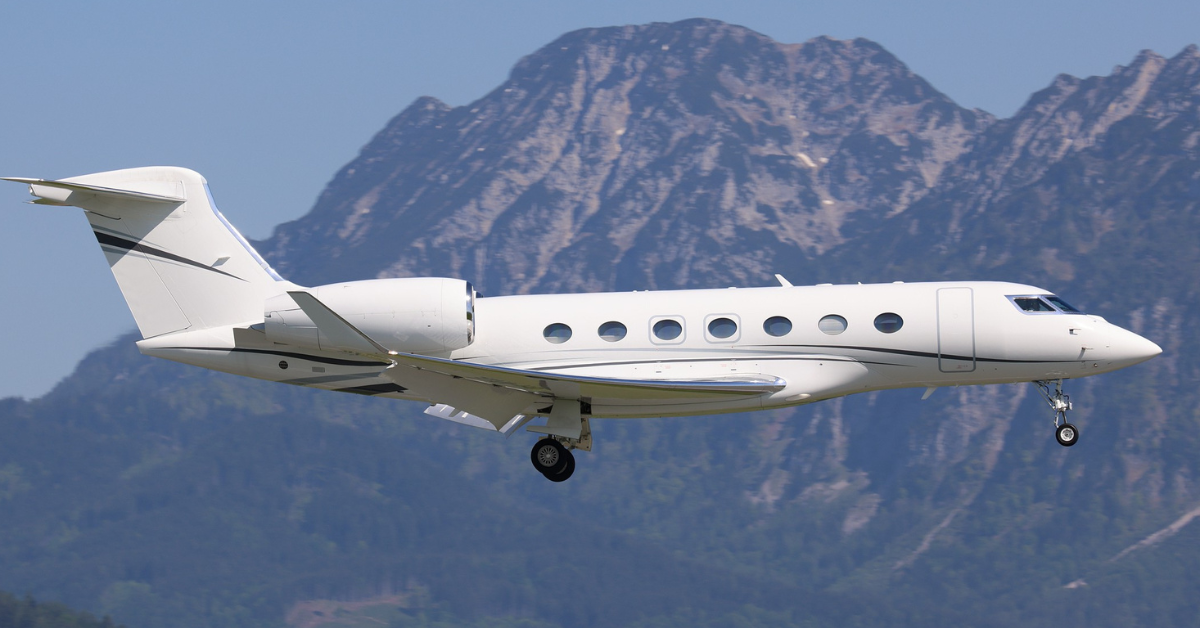
The Gulfstream G500 occupies a well-defined position within the long-range segment, combining intercontinental capability with balanced operating economics.
Based on full-year 2025 pre-owned market data, the active G500 fleet stands at 175 aircraft, with 8 currently available on the market. Average ownership is 4.4 years, with time on market measured in months, supported by steady absorption.
For operators considering the Gulfstream G500, availability remains limited. Jetron currently offers a Gulfstream G500 available for sale.
One signal stood out clearly at the start of the year: efficiency carried volume. Aircraft optimised for frequent, short-range missions accounted for the majority of movements.
January 2026 opened the year with clarity. The market returned to motion quickly, establishing patterns built around reach, efficiency and repeatability.

JETRON has once again closed a transaction involving a large-cabin business jet.
August marked a step down from July’s peak activity
Jaroslav brings more than two decades of experience in the aviation industry





_white.png)