Business aviation activity remained overwhelmingly European throughout June.
By June, Europe’s business aviation market had settled into its summer operating rhythm. Rather than being defined by expansion alone, the month reflected a network performing at full capacity, supported by strong fleet utilisation, extensive connectivity and sustained demand across the continent.
From above, June 2026 revealed a market where aircraft, airports and operators worked together within one of the year’s most active operating environments.

June became the busiest month of 2026 so far, highlighting the continued strength of business aviation across Europe.
A total of 88,624 arrivals were recorded during the month, supported by 5,763 active aircraft operating through 1,439 active airports. Operations generated 35,153 unique airport pairs, demonstrating both the maturity and flexibility of Europe’s point-to-point network.
Rather than simply expanding, the market show edits ability to sustain high volumes while maintaining broad geographic coverage and operational efficiency.

Europe’s leading business aviation airports remained at the heart of network activity throughout June.
Paris Le Bourget once again led the market, while Nice continued to strengthen its role as one of Europe’s busiest seasonal gateways. Geneva, Farnborough and Milan Linate remained among the continent’s most active business aviation airports, supporting a mix of corporate travel, regional connectivity and leisure-driven demand.
Together, these airports illustrated how established hubs continue to anchor Europe’s increasingly interconnected business aviation network.

June’s busiest airport pairs reflected a market operating at full seasonal rhythm.
Traffic continued to concentrate around major European gateways while maintaining strong point-to-point connectivity between business centres and Mediterranean destinations. High-frequency routes linking Paris, Geneva, Nice, London and Northern Italy highlighted the balance between corporate mobility and seasonal travel demand.
The result was a network that remained both extensive and highly efficient, capable of supporting a wide variety of mission profiles across Europe.
Business aviation activity remained overwhelmingly European throughout June.
The strongest traffic flows continued to connect France, Switzerland, Italy, Germany, the United Kingdom and Türkiye, reinforcing Europe’s position as the world’s most interconnected regional business aviation market.
While intercontinental activity remained present, the European network continued to provide the foundation for overall market performance.

Fleet activity demonstrated the continued importance of operational diversity.
Turboprops remained essential for regional connectivity and access to smaller airports, while Light Jets continued to support high-frequency business missions. Super Midsize, Heavy and Ultra Long Range aircraft maintained strong utilisation throughout the month, reflecting sustained demand across both regional and intercontinental operations.
The overall fleet mix highlighted a market where no single segment dominated. Instead, efficiency came from the ability of multiple aircraft categories to complement one another across different mission profiles.
June also brought together leaders from across the business aviation industry at Corporate Jet Investor Malta 2026, one of Europe’s leading conferences for aircraft transactions, management and charter.
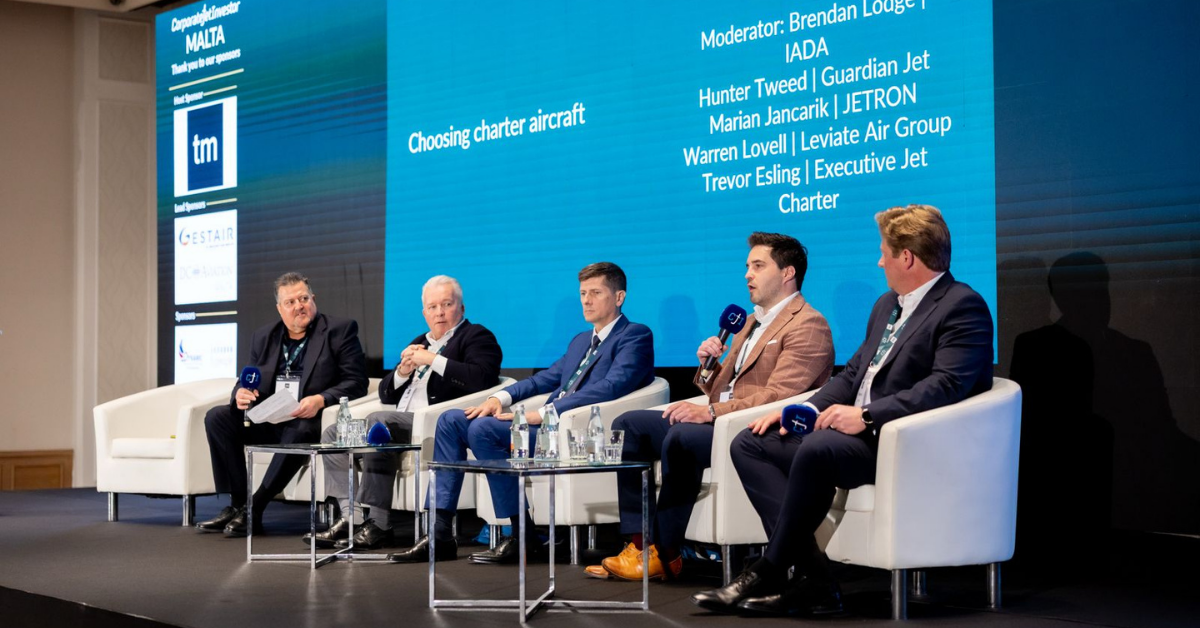
Jetron was proud to participate as an official sponsor of this year’s event, providing an opportunity to reconnect with partners, strengthen existing relationships and engage with professionals from across the global business aviation community.
Events such as CJI Malta continue to reflect the importance of collaboration and market insight within an industry built on long-term relationships.
The Beechcraft King Air 200 remains one of the most successful and enduring turboprop aircraft ever produced. Combining reliability, operational efficiency and exceptional versatility, it continues to play a vital role in regional business aviation more than five decades after its certification.

Today, the active global fleet numbers 564 aircraft, while only 23 verified aircraft are currently available for sale, representing just 6.38% of the active fleet. This limited availability reflects the model’s continued relevance and stable demand within the pre-owned market.
Its ability to operate from shorter runways, serve regional airports and deliver dependable performance makes the King Air 200 particularly well suited to the diverse mission profiles that continue to shape European business aviation.
For operators considering this proven platform, Jetron currently has a Beechcraft King Air 200 available for sale.
One trend became increasingly clear throughout June: the European business aviation market was no longer building momentum — it was sustaining it.
High aircraft utilisation, expanding connectivity and consistent activity across every major segment pointed to a network operating with confidence, efficiency and remarkable stability.
June 2026 demonstrated the resilience and maturity of Europe’s business aviation market. Rather than relying on isolated peaks of activity, the network delivered sustained performance across thousands of routes, hundreds of airports and every major aircraft category.
As the summer season continues, the market remains defined not only by its scale, but by its ability to consistently connect people, businesses and destinations across Europe.

JETRON has once again closed a transaction involving a large-cabin business jet.
August marked a step down from July’s peak activity
Jaroslav brings more than two decades of experience in the aviation industry





_white.png)